
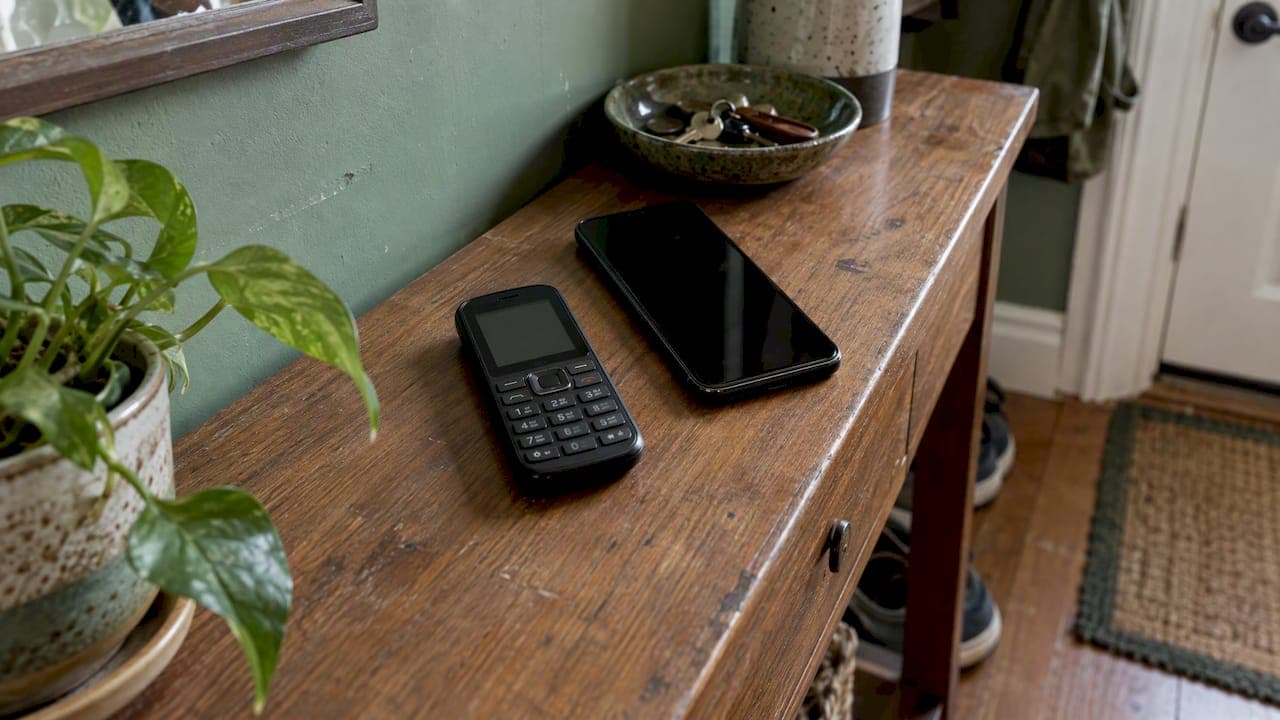
A burner number is a temporary or secondary phone number you give out instead of your real one. It can be tied to a cheap prepaid handset, but today it is more often an app or web service that gives you a number on the phone you already own. You use it for sign-ups, marketplace listings, dating apps or any place that asks for digits you would rather not hand over. When you no longer need it, you stop using it.
That is the short version. The useful part is knowing which kind of burner number fits your situation, why some websites refuse them, and what a burner number can and cannot protect.
TL;DR
- A burner number is a disposable or secondary number used in place of your main one. A burner phone is the physical version, with its own handset and prepaid SIM.
- For verification codes, a burner number keeps your real number off sign-up forms and out of marketing lists, but some services block numbers they recognize as internet-based.
- Free public inboxes are not private. Anyone can see the messages, so never use them for anything sensitive.
- Do not use a throwaway number for an account you will need to recover later, such as banking, email or your main social profile.
- For one-time codes, a pay-as-you-go temporary number with a refund if the code never arrives is usually the cleanest option.
Table of Contents
- Burner number meaning: number versus phone
- Why people use a burner number
- How a burner number receives a verification code
- Why some services reject burner numbers
- The risks you should know about
- Which kind of burner number do you need?
- What we do about it at vSMS
- Perspective: a burner number is a tool, not a cloak
- How to use a burner number for sign-up, step by step
- How to tell if a number is a burner
- FAQ
- Sources
Burner number meaning: number versus phone
People use "burner" for two different things, and the confusion is behind most of the questions you see online.
A burner phone is a separate, low-cost handset with a prepaid SIM. Norton describes it as the older, physical approach. You buy it, use it for a while and discard it. Because it is its own device, it gives you hardware separation from your primary phone, although Norton notes that networks can still track the device itself.
A burner number is the number, not the device. It is a temporary or secondary number you use instead of your main one, often through an app. Norton points out that an app-based number runs on the phone you already have, so you do not need to carry a second one.
In practice:
| Burner phone | App or web burner number | |
|---|---|---|
| What you get | A separate handset and prepaid SIM | A number delivered through an app or website |
| Extra device needed | Yes | No |
| Typical number type | Regular mobile number | Usually internet-based (VoIP) |
| Best for | Higher-risk privacy needs, physical separation | Everyday separation, spam reduction, verification codes |
| Weak spot | Cost, carrying a second device, handset still trackable | Some services block internet-based numbers |
This article is mostly about the second column, because that is what most people mean when they search for a number to use during sign-up.
Why people use a burner number
A phone number does more than let people call you. The Electronic Frontier Foundation notes that a number is often personally identifying, and that you might not want to give it to professional contacts, new acquaintances or people you do not necessarily trust.
Privacy Guides adds that a phone number can identify you across multiple services and make your activity easier to track, and that phone numbers are often not encrypted when a service suffers a breach. Hand the same number to ten companies and you have given ten companies a shared key to your identity.
That is why the common uses look like this:
- Signing up for apps and websites that demand a number before they let you in, when you only need the one-time code.
- Online marketplaces and classifieds, where strangers contact you about a sale.
- Dating apps, where you want to move a conversation along without giving out your real number.
- Free trials and promotions, where a number is requested and follow-up texts are likely.
- Keeping work and personal life apart, with a second line for one purpose.
- Cutting spam, since a number you can abandon makes marketing lists a smaller problem.
None of that requires secrecy for its own sake. It is compartmentalization: a number for this purpose, a different one for that.
How a burner number receives a verification code
The mechanics are simple. You choose a number, often by country or region, and enter it into the app or site that wants to verify you. The service sends a text with a one-time code. The code shows up in your burner service, on a web page or inside an app, and you type it back into the original sign-up form.

Malwarebytes Labs describes the typical anonymous SMS site the same way: you select a regional number, enter it into an online service and read incoming messages on the site.
The differences between services come down to four things:
- Who can see the messages. Public inboxes show them to every visitor. Private numbers show them only to you.
- Whether the number is shared. A number used by hundreds of people has probably already been flagged by the services you want to join.
- What happens if the code never arrives. Some services keep your money. Others refund it.
- How long you keep the number. One-time rental, a few days or a permanent line.
Why some services reject burner numbers
This is the part most guides skip. Many app-based burner numbers are internet-based, which the industry calls VoIP. Norton notes that these numbers are typically VoIP, linked to your primary device and app-store accounts, and may be blocked by services during verification.
Privacy Guides puts the same risk from the other side: some services allow VoIP numbers, but they often trigger fraud detection systems and can cause an account to be locked down.
From the website's point of view, this makes sense. A sign-up with a disposable number looks the same as a bot farm creating fake accounts. So the platform filters. What you see is a message such as "this number cannot be used" or a code that simply never arrives.
What improves your odds:
- Try a number from a country or carrier range the service handles well.
- Avoid numbers that thousands of other people have used on the same site.
- Pick a service that tracks which countries deliver codes reliably, so you are not guessing.
- Choose one that refunds you if nothing arrives, so a failed attempt costs nothing.
No provider can promise that every app will accept every number. Platforms change their rules without notice. Anyone claiming a 100 percent success rate is selling you something.
The risks you should know about
Public inboxes are not private
Malwarebytes Labs warns that messages on many free temporary-number sites can be seen by other visitors, so they should not be used for sensitive transactions. A temporary number does not automatically make SMS private. Convenience and anonymity are not the same as confidentiality.
If you use a public inbox for a throwaway forum account, little is at stake. If you use one for anything involving money, personal documents or an account you care about, a stranger could read your code before you do and take the account.
You can lose access to the account
Privacy Guides recommends avoiding your real number when possible, but warns that supplying a fake number can lock you out of important accounts that later need SMS or calls. The same logic applies to a burner you let expire. If the service asks for a code months later to confirm a password reset or a new login, and the number is gone, so is your account.
A good rule: use disposable numbers only for accounts you can afford to lose. For anything you want to keep, use a number you will still hold next year.
An app number is not an anonymous number
Norton's perspective is that app-based numbers are convenient for ordinary separation and spam reduction, while a separate physical device offers stronger hardware isolation for higher-risk privacy needs. An app number tied to your app-store account and your phone is not the tool for someone facing a serious threat. It is the tool for keeping your real number out of a database.
Ending a number cleanly
If you have used a number for an account and plan to stop using it, the U.S. Federal Trade Commission advises that when you are not keeping a number, you should update it on accounts and services that use it to identify you. Changing the contact number before you drop it avoids a later lockout or a stranger inheriting your recovery texts.
Which kind of burner number do you need?
Match the tool to the job:
| Your situation | What fits |
|---|---|
| One code to finish a sign-up, then you are done | A temporary number rented for a single verification |
| A sign-up that asks for email, not a phone | A temporary email address |
| Ongoing texts and calls for dating, selling or side work | A second number you keep |
| Account you will need to recover later | Your real number, or a long-term number you control |
| High-risk privacy need | A separate physical device, as Norton describes |
For a deeper look at how the different types stack up, see how the main alternatives compare for verification codes.
What we do about it at vSMS
We built vSMS for the first row of that table: you need a code, you do not want to give out your real number, and you do not want to pay for a number that fails.
You buy credits as you go and use them for a temporary number for SMS verification codes or a temporary email address. Codes appear instantly on the web or in our iPhone app. If a code does not arrive, your credits are refunded automatically. We also show delivery ratings for each country, so you can pick the options that have worked best rather than gambling.
For sign-ups that ask for an email instead, our temp mail uses mainstream domains, which are less likely to be blocked than the obscure ones free sites rely on. If you want a number to keep for calls and texts, we offer a second number for US and Canada through an optional subscription in the iPhone app. You can also connect vSMS to AI assistants to automate code retrieval.
We publish no fixed price list on the site, so check the temp number page for current credit costs. If you are weighing us against a classic burner app, this comparison lays out the differences for verification codes. And if you have been using public inboxes, here is why a private number is a different thing.
Perspective: a burner number is a tool, not a cloak
We talk to a lot of people who think of a burner number as an invisibility switch. It is not. It is a boundary. You decide which companies get your real number and which only get a number that points nowhere.
That boundary has real value. Most sign-up forms ask for a phone number because it is useful to the company, not because it is needed to deliver what you signed up for. A number you hand out becomes an identifier that follows you from service to service and sits in databases you will never see.
But we also think the industry oversells itself. A number that a platform recognizes as disposable will sometimes be refused, and no honest provider can change that. What we can do is make failure cheap and make success likelier: pick numbers by how well they actually deliver in each country, and give your credits back when a code is lost. That is why automatic refunds and per-country delivery ratings are central to how vSMS works, rather than a footnote.
Our advice is to be deliberate. Use a throwaway number for things you can walk away from. Keep your real number, or a stable second one, for anything that matters. And never put anything sensitive through a shared, public inbox.
— Adil
How to use a burner number for sign-up, step by step
- Decide how long you need it. One code, a week, or long term. This picks the type of number.
- Choose a private number, not a shared public one, so no one else can read your code.
- Pick a country with a good delivery record for the app you are joining. If you are signing up for Signal without your personal number, check which regions have worked well.
- Enter the number in the sign-up form and request the code.
- Read the code in the web page or app and enter it before it expires.
- If it fails, try another number rather than requesting the code repeatedly from the same one. Repeated requests can trigger limits.
- Note what the account is for. If you may need it later, switch the account to a number you will keep.
For specific walkthroughs, we keep guides for popular apps such as Amazon, Snapchat and others on our verification codes page.
How to tell if a number is a burner
People also ask whether you can spot a burner number. Often you cannot from the digits alone. A burner phone's number looks like any mobile number. An app-based number can look like a normal local number too. Companies that need to know run lookups that classify numbers as mobile, landline or VoIP, which is how many services decide to block a sign-up. If you receive a call from an unfamiliar number, the digits will not tell you whether it is a burner, so treat unexpected requests for money or codes with care either way.
FAQ
Is a burner number the same as a burner phone?
No. A burner phone is a physical, low-cost handset with a prepaid SIM. A burner number is just the number, usually delivered through an app or website to the phone you already have. The phone gives you more separation from your main device, while the number is cheaper and easier to use.
Can I use a burner number for verification codes?
Often yes, but not always. Some services accept internet-based numbers, while others flag them as likely fraud and block them or lock the account. Using a private number, picking a country with good delivery, and choosing a service that refunds failed codes all improve your chances and limit your loss.
Are free temporary number websites safe?
They are fine for accounts you do not care about, but not for anything sensitive. Many show incoming messages to every visitor, so someone else could see your code. Use a private number for anything involving money, personal data or an account you want to keep.
Is a burner number anonymous?
Not completely. An app-based number is usually linked to your phone and app-store account, so it separates your real number from a website but does not make you untraceable. If you face a higher-risk situation, a separate physical device offers stronger isolation, though even that can be tracked on the network.
What happens when a burner number expires?
Any account that uses it for recovery or login codes can become hard to access. Before you let a number go, change the contact number on every account that still relies on it. For accounts you want to keep long term, use a number you will hold onto.
Sources
- What is a burner phone? How they work and when to use one (Norton)
- Watch what you send on anonymous SMS websites (Malwarebytes Labs)
- How to Create Internet Accounts Privately (Privacy Guides)
- Thinking About What You Need In A Secure Messenger (Electronic Frontier Foundation)
- How To Remove Your Personal Information Before You Get Rid of Your Phone (FTC)